Imagine an ordinary day in Brno. Early in the morning, a delegate from Germany arrives. He has never been to Brno before. As he steps out of the main railway station, he pauses for a moment, looks around, and slowly begins to form his very first impression of the city that will become his professional base for the next few days.
On his way to the conference, he stops for breakfast at one of the cafés he discovered through recommendations in the event app — and that is exactly the moment when Brno starts earning its first points. Throughout the day, he gains new knowledge during presentations, exchanges ideas with colleagues, and builds valuable connections. In the evening, he heads out for dinner with the other participants, strolls through the city centre, and experiences the atmosphere of Brno beyond the conference halls.
For us, it may feel like just another ordinary evening in Brno. For him, however, it is the very first real experience of the destination.
And that is precisely the moment when something truly important for the city begins to happen.
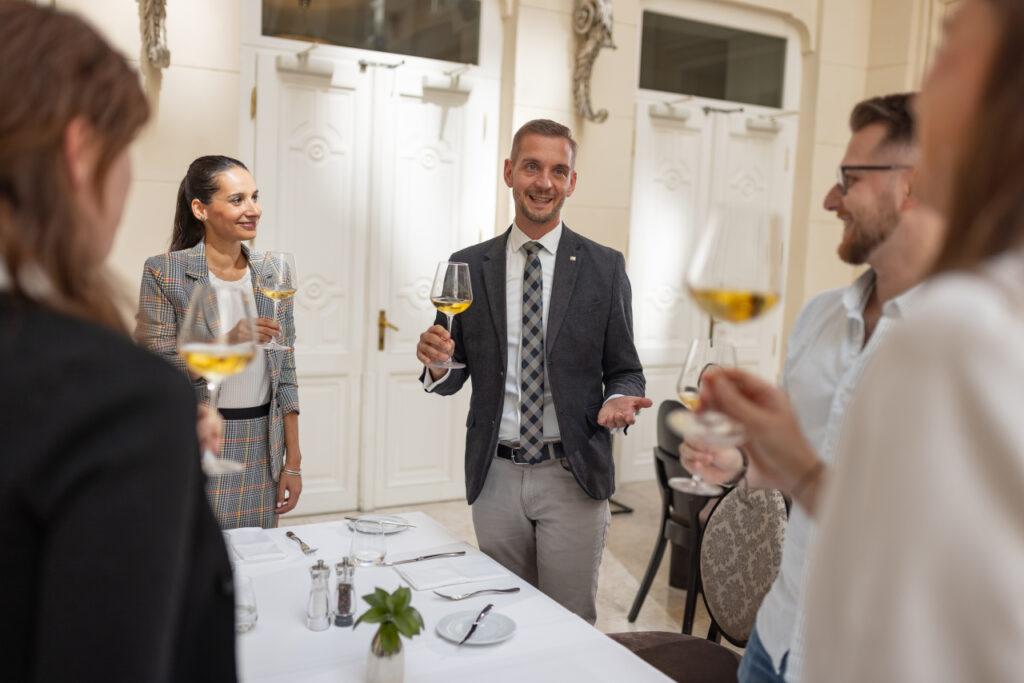
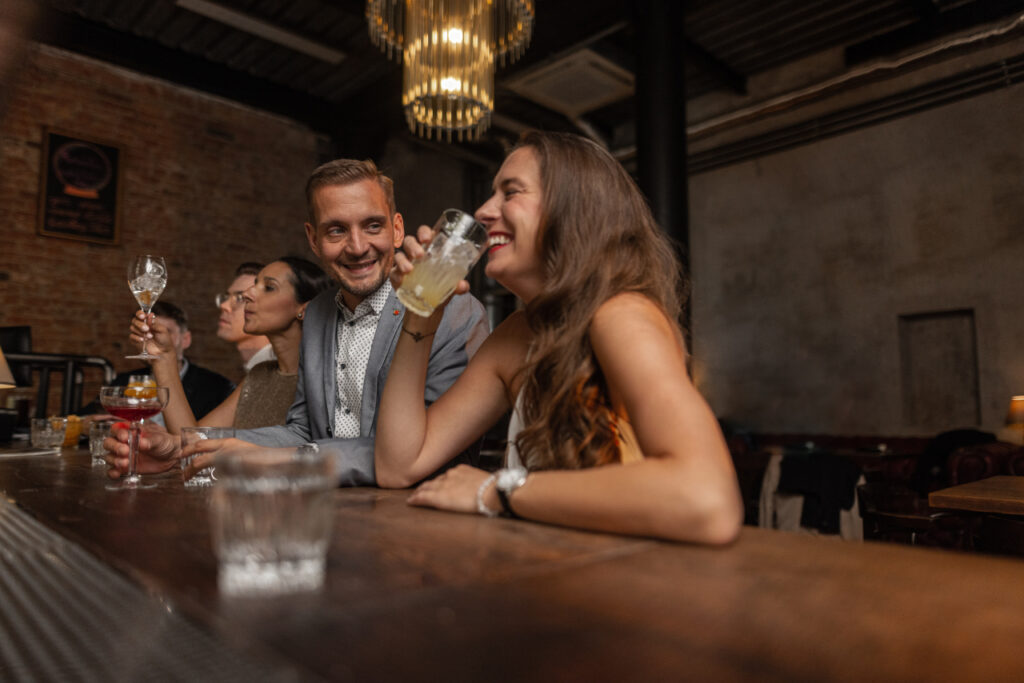
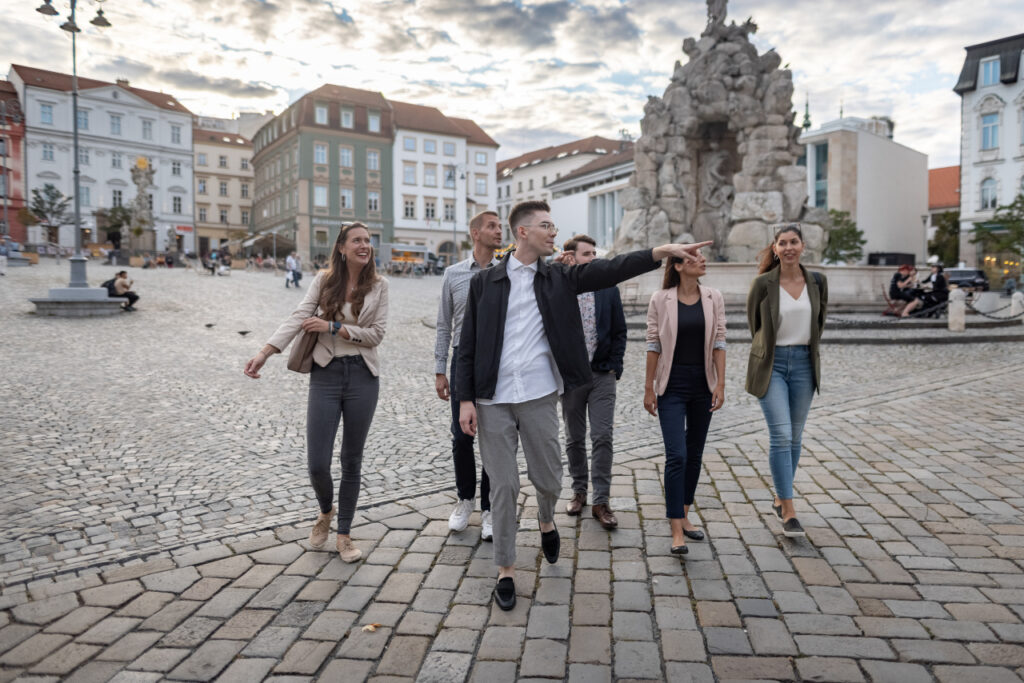
Every event works as a living campaign
We may not even realize how many of these moments are created during a single event — how many conversations, small interactions, and decisions emerge between presentations, during coffee breaks, or over the evening programme. And now let’s ask ourselves one question: how many of these moments do we actively shape?
This is exactly where the importance of cooperation between everyone involved in an event becomes visible. Because when the convention bureau, the organiser, and the venue work as one team, they can consciously influence these “invisible moments.” What people ultimately take away from a conference is not hidden in the keynote slides or in a perfectly timed agenda. It lives in the details.
Organisers often focus intensely on refining the content, polishing every minute of the accompanying programme, and searching for the perfect format. But in the end, the overall impression is shaped by something far less tangible — how the delegate feels. Do they feel welcomed? Can they navigate the city with ease? Does everything feel natural and seamless? That feeling is what they carry home with them.
And it is precisely that feeling which determines whether they will ever return.
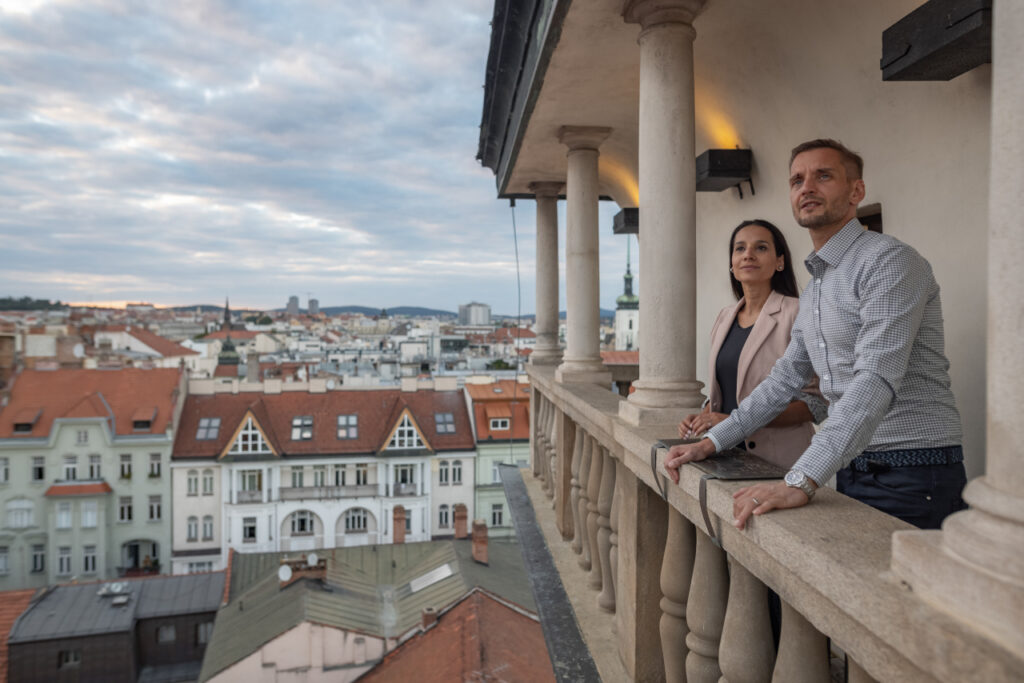
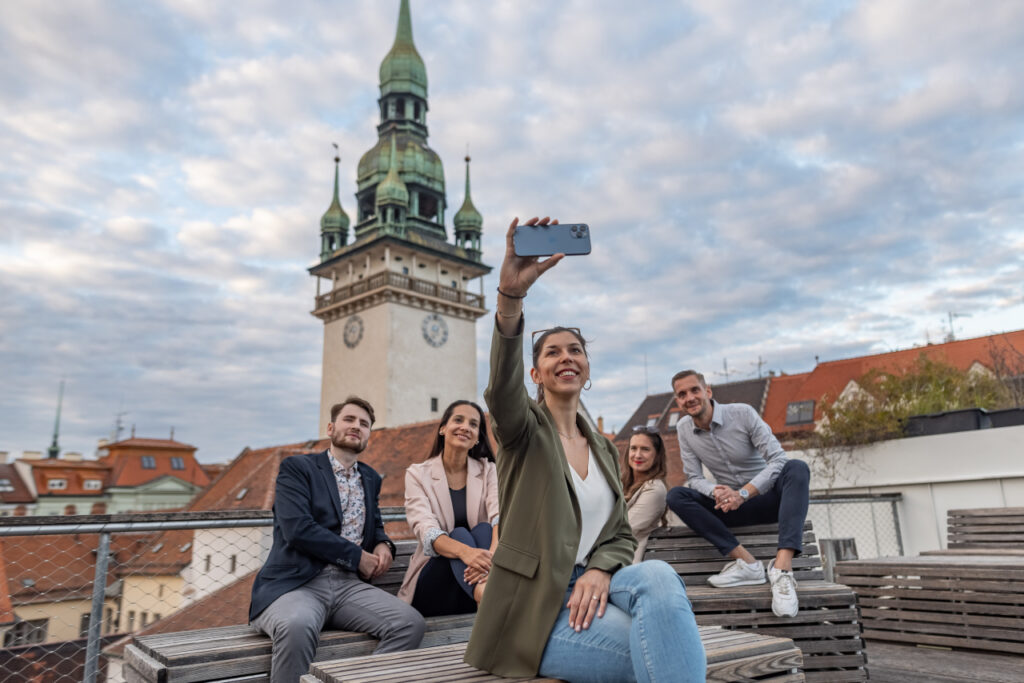
Everyone pulling in the same direction
And this brings us to the question of who actually shapes this feeling. At first glance, it seems simple enough. There is the organiser preparing the event, the hotel or venue hosting it, and somewhere “around” them, the convention bureau. But that idea of being merely “around” the process has long been somewhat misleading.
For years, the industry often worked in a way where everyone handled only their own part. The organiser sent out requests, the hotel prepared an offer, and the convention bureau perhaps recommended a few contacts. Everything functioned — but more side by side than truly together. And this is exactly where the industry is beginning to evolve.
It is becoming increasingly clear that if an event is meant to truly succeed — not only organisationally, but also in terms of its wider impact on the destination — these three parties need to operate as one team. They need to share information, get involved early, and think about the event in context, not only from their own individual perspective.
So where does the main role of a convention bureau actually lie? Perhaps surprisingly, our role is not to sell conference halls or organise the events themselves. Our strength lies somewhere else entirely. We know the South Moravian “playing field” inside out. We understand which venues make sense for particular types of events, we know the local partners and their strengths, and we have a clear overview of what works in the destination — and what does not. Most importantly, we connect people who might otherwise never meet.
We help organisers navigate the destination and find solutions that make sense not only logistically, but conceptually as well. At the same time, we help hotels and venues better understand the client’s needs within a broader context. As a result, what emerges is not just an “offer,” but a complete experience that truly works. And when this connection succeeds, it shows. Delegates may not always be able to describe it, but they can feel it. Things flow naturally, the environment feels seamless, and the entire experience holds together as one coherent story. And it is precisely these seemingly small details that determine whether they will remember the city at all.
Collaboration above all
That is why one simple idea is becoming increasingly common across the industry today: the destinations that succeed are not necessarily those with the best infrastructure, but those that know how to collaborate best. And closely connected to this is another important reality. An event no longer ends when the lights go out in the conference hall. Quite the opposite — that is when its long-term impact truly begins.
Every delegate leaves with an impression. And that impression influences future decisions: where they will travel next as a tourist, what they will recommend to colleagues, or where they may choose to organise another event. Sometimes, it can even lead to something far more valuable — a business partnership, a collaboration, or an investment opportunity.
For Brno, this represents a tremendous opportunity. The city already offers strong facilities, solid infrastructure, and a compact character that makes it ideal for events. But what will ultimately determine its future growth is the ability to genuinely connect all these individual elements together. To connect organisers, hotels, institutions, and local partners so they no longer operate separately, but as one coordinated ecosystem.
And this is precisely where Brno Convention Bureau plays an important role — helping to build these connections, strengthen them, and give them a clear direction.