At the end of August, we attended the City Destinations Alliance Summer School 2026 in Dijon. One of the central themes explored through lectures and practical workshops was legacy: the lasting impact that a congress or other business event can leave on its host city.
Shortly after the Summer School, an inspiring interview was published with Anita Paic, Director of the Vienna Convention Bureau, exploring how Vienna takes a systematic approach to event legacy.
The topic is becoming increasingly relevant to us at the Brno Convention Bureau, too. As we consider how to embed it more firmly into our work for Brno and the wider region, we have brought together insights from the Summer School, Vienna’s experience and the first examples emerging in Brno in this article.
From visitor economy to value creation
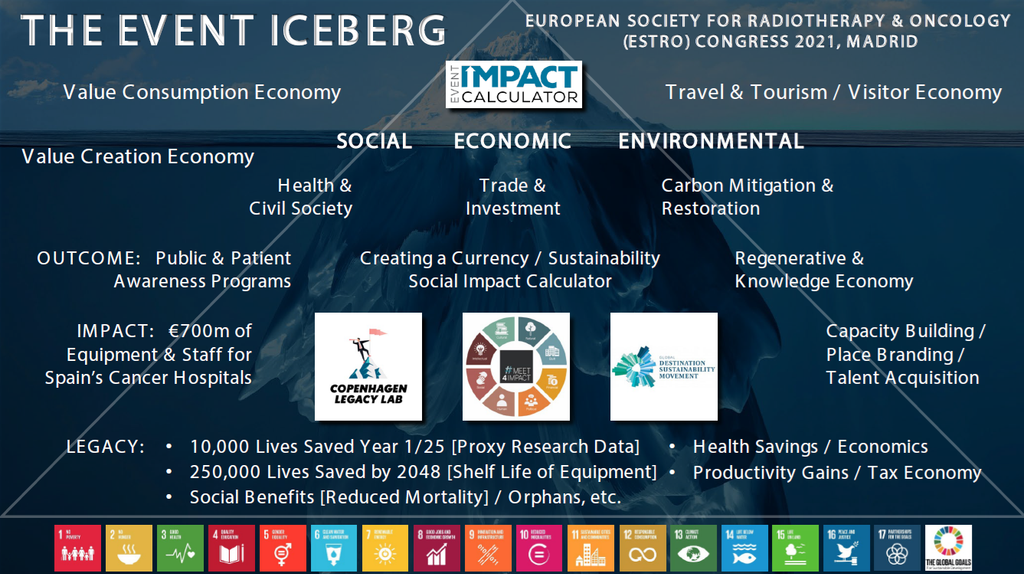
At the Summer School, James Latham of The Iceberg used a simple analogy: the economic impact of tourism is only the visible tip of the iceberg. Below the surface lie changes with the potential to last much longer, including knowledge transfer, talent development, new professional networks, investment and greater public awareness of important issues.
Traditional metrics such as overnight stays and visitor spending are therefore worth complementing with a broader question: what change could the presence of an expert community set in motion within a destination?
Legacy is not an add-on
Examples from Vienna show that legacy is not created by adding a charitable activity to a finished programme at the last minute. The Vienna Convention Bureau introduces the topic from its very first conversations with an organiser. Its team asks:
- What is your organisation or professional community seeking to change?
- What knowledge, experience or connections will your delegates bring?
- Who in the host city could benefit from them?
- Which local schools, universities, hospitals, businesses or non-profit organisations would be valuable to involve?
The convention bureau then acts as a connector: the organiser understands their community and its mission, while the bureau knows the city and the local partners who could help bring that mission to life.
What does legacy look like for local communities?
Examples from Vienna show that meaningful legacy can take many forms and operate on very different scales:
Health and education. Ahead of the European Renal Association Congress, six classes from three Vienna schools took part in the Kidney School project. The pupils’ work was displayed during the congress, each school received €1,000 to continue its health education activities, and a mobile unit offered free kidney screenings to the public.
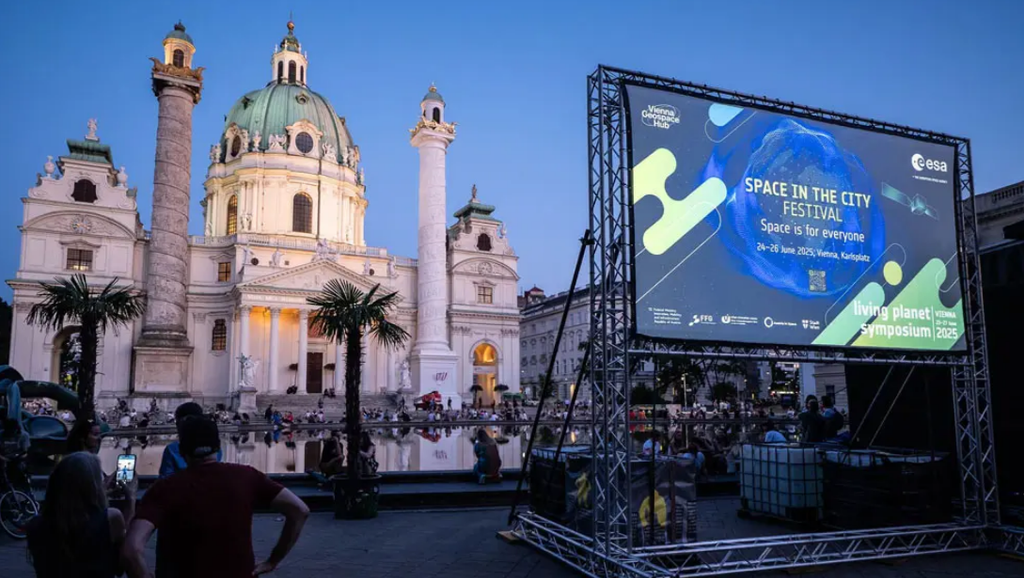
Science in public spaces. The European Space Agency’s Living Planet Symposium was accompanied by the Space in the City programme. Karlsplatz became an open-air laboratory, where more than 2,000 schoolchildren took part in hands-on science activities.
Technology for the whole city. A free Festival of Robots was held ahead of the IEEE International Conference on Robotics and Automation. It attracted 15,000 local residents, families and school groups keen to explore robotics and emerging technologies.
A small initiative with tangible benefits. Ahead of the Physio Austria Symposium, students carried out around 200 free mobility assessments for visitors to a shopping centre. It did not require a major festival, just the right connection between professional expertise and an everyday urban setting.
Smaller initiatives can be equally valuable: donating surplus catering, arranging expert sessions with students, offering mentoring opportunities, involving delegates in volunteering or opening part of the programme to the public. What matters is not the scale, but the connection to the event’s purpose and the genuine needs of local communities.
Brno: Early examples to build on
Brno is already home to initiatives that point in the right direction. They may not yet be comprehensive legacy programmes with predefined objectives and long-term measurement, but they provide strong foundations for further development.
Microscopy connects specialist expertise with the public. In 2026, twenty institutions and companies took part in Brno’s Electron Microscopy Days. Through lectures, exhibitions and laboratory visits, one of the city’s key fields becomes accessible to schools, families and the wider public. Brno’s professional expertise is thus transformed into education, a stronger sense of local identity and, potentially, the development of future talent.
The World Esperanto Congress strengthened cultural exchange. In 2025, the congress brought 1,131 people from 63 countries to Brno. The National Evening at Špilberk Castle, concerts and lectures on the host country’s language and literature connected the international community with local culture. A possible next step could be to open more of the programme to local residents or involve schools.
ICRR 2027 is considering its wider impact from the planning stage. The congress programme includes a charity run around Špilberk Castle. While the run alone does not constitute a long-term impact, it demonstrates an effort to connect the professional event with its host city and a cause that benefits the wider community.
How convention bureaux can get started
A convention bureau does not need to launch an extensive programme or establish a new fund straight away. It can begin with four steps:
- introduce the topic of legacy in the very first conversation with the organiser;
- connect the organiser with a small number of relevant local partners;
- choose one realistic activity aligned with the event’s theme;
- define its intended outcome in advance and decide who will evaluate it after the event.
Depending on the focus of the congress, this could involve preventive health screenings, a programme for schools, opening a laboratory to the public, mentoring, expert support for the city, delegate volunteering or new connections between research institutions and businesses.
This is not a checklist of mandatory activities. Meaningful legacy must always grow from the event’s purpose and a genuine local need.
Not every event will transform an entire city, nor does it need to. A meaningful legacy can begin with a single school class, one new partnership or two hundred people gaining access to a valuable service because an expert community came to town.
The ambition is for a congress to be more than an event that simply takes place in a destination. It should become an opportunity that creates lasting value for it.